Insights for website owners
AI made the first version cheaper. It didn't make the next three years of running it cheaper.
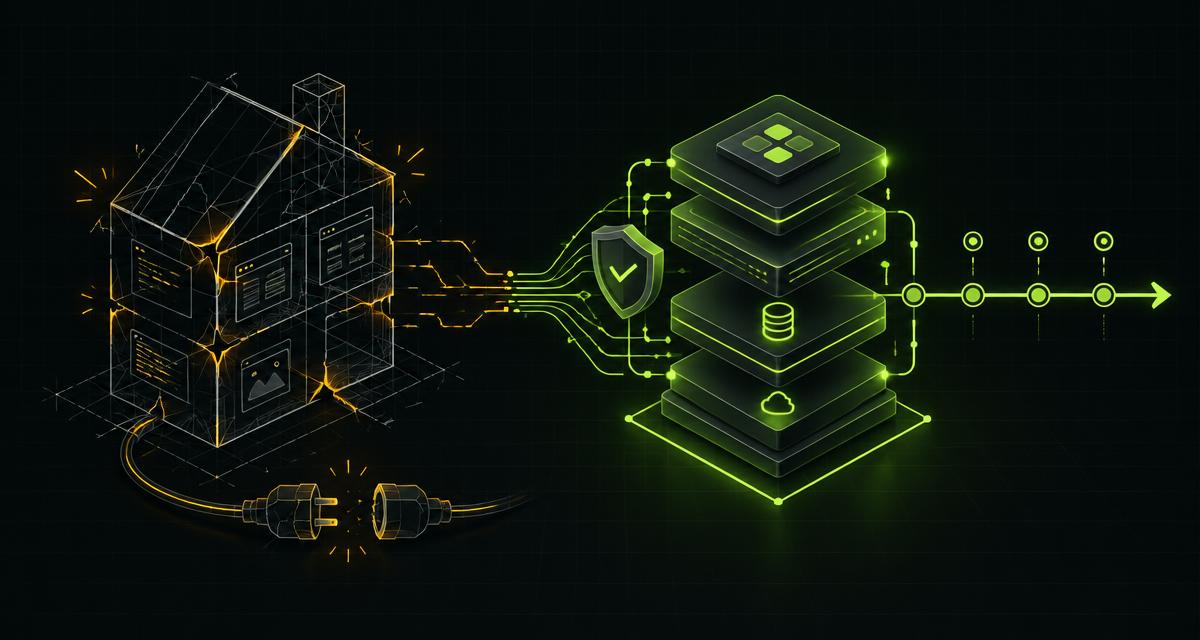
Today almost anyone can put up a website or a simple app in a single weekend. The real business problem comes three weeks later - when browsers update, payment systems fail and nobody in the company knows where client data is actually stored.
Over the past year I've been hearing very similar stories:
"Why pay an engineer or a monthly subscription when a student / an acquaintance / someone with the new tools built the whole thing in two days for pocket money?"
The answer is simple: AI tools are fantastic for a quick start. They've done what industrial machines did for manufacturing - drastically cut the time to assemble the first version of the code. But code isn't a static product like a table or a wardrobe. Code is a living mechanism embedded in a constantly changing web environment.
Building something that works for ten minutes in a meeting demo is cheap today. Making sure that same system runs flawlessly today, in a year and in three years requires exactly as much engineering knowledge and oversight as ever. That's why, as I wrote in why the real work on a website starts after launch, the real work begins after launch.
Where do "weekend solutions" fall apart?
When a system is built quickly and without an engineering foundation, silent failures start in the company - and management often only notices them when there's financial damage:
- Silent integration breaks: Web forms, booking systems and payment gateways communicate through external connections (APIs). When the payment provider updates its security requirements, a system nobody maintains simply stops processing purchases - without warning.
- Technical debt piling up without documentation: When a tool generates code without a clear architecture, nobody knows the database structure. At the first error nobody knows where to look for the cause, and a fix often means tearing everything down and rebuilding.
- Security vulnerabilities and legal risks: Sites assembled in a hurry rarely follow strict data protection rules (GDPR), lack proper separation of access and use outdated libraries that become easy prey for automated attacks.
With business systems, the question is never whether you can build the first version. The question is: would you trust a solution built over a weekend with your bank transactions and your client database?
What are you actually paying an engineer for?
When you hire an external IT architect or sign up for a managed model (WaaS), you're not paying for typing the first lines of code. You're paying for responsibility for keeping the business running without interruption.
- Control over the environment and updates: The system is under constant monitoring. When web protocols or security standards change, adjustments are made in the background before they disrupt the business.
- Clean, maintainable architecture: Using advanced tools to build fast only makes sense if the code is modular, documented and isolated from external risks.
- Immediate incident triage: When something fails in the business, the owner can't go hunting for the code's author on social media. They need a binding response time and an engineer who knows exactly which process to restart.
I've explained what this realistically costs in how much website maintenance costs.
Comparison: a quick tool-built solution vs a maintained system
| Element | Solution built over a weekend | Maintained engineered system (WaaS) |
|---|---|---|
| Initial cost | Very low (a few hours of work with tools) | A predictable fixed monthly subscription |
| Maintenance and stability | No oversight; works until the first protocol change | Ongoing security checks and regular updates |
| Handling critical errors | Finding outside help from scratch; long outages | Priority response time within the agreed SLA |
| Data security and compliance | Frequent vulnerabilities and unclear storage locations | Encrypted databases, audit trails and care for GDPR compliance |
| Total cost (TCO after 3 years) | Unpredictable (expensive emergency fixes or a rebuild) | Known in advance, with no hidden items or unpleasant surprises |
Frequently asked questions
Does this mean using modern AI tools to build a site isn't recommended?
On the contrary. We engineers use these tools every day, because they speed up development and take care of routine tasks. The key difference is that the tool is guided by someone who understands system architecture, security protocols and how databases work. The tool is just a hammer - the building has to stand on solid foundations.
What happens to our business if the website or app goes down for 24 hours?
For a presentation site it means lost reputation and missed enquiries. For systems with bookings, online sales or internal databases, an outage means direct financial damage, confusion in operations and unhappy clients. That's why the cost of regular maintenance is as a rule much lower than the cost of recovering from an outage.
Why is a monthly subscription model (WaaS) safer than a one-off build fee?
With a one-off payment, the developer leaves the project after handover, and every later fix means new negotiations, unpredictable hourly rates and waiting. With a subscription model (WaaS), the provider carries ongoing responsibility for security, uptime and updates, while you have an agreed response time and continuous care for development and improvements.
Want a stable system with development, security and priority response included, at predictable monthly costs? See what the AI & GEO Growth package (WaaS) includes, or try a free AI review of your website.